
Rewilding Bison and Restoring Pride in Romania

A few months ago, a magazine editor in Copenhagen, Denmark, contacted me to see if I was interested in writing about the reintroduction of European bison in the Southern Carpathians mountain range of Romania.
That’s right, bison.
The massive mammals roamed freely in Romania more than 200 years ago until hunting drove them to near extinction. I’d heard and even read stories about these rewilding efforts in recent years and was familiar with a bison reservation in Transylvania, one of five in Romania, that’s been around since the 1950s. Beyond that, I didn’t know much.
The old news wasn’t the story, of course, but rather to look at how local people and businesses have embraced the return of the bison and how that manifests through cultural identity, including tourism, cuisine, arts and crafts – and local pride.
I loved the idea and after a couple of video calls and working out the financial and travel details, I happily accepted.
In late April, after doing loads of research, I put my reporter cap back on and, notebook in hand, headed to the Southern Carpathians, specifically the small town of Armeniș and surrounding villages in Caraș-Severin County.
The result, “Welcome to Bison Country: How the return of a lost giant is shaping culture in Romania’s Southern Carpathians,” came out last week in Imagine5, about which I’m thrilled.
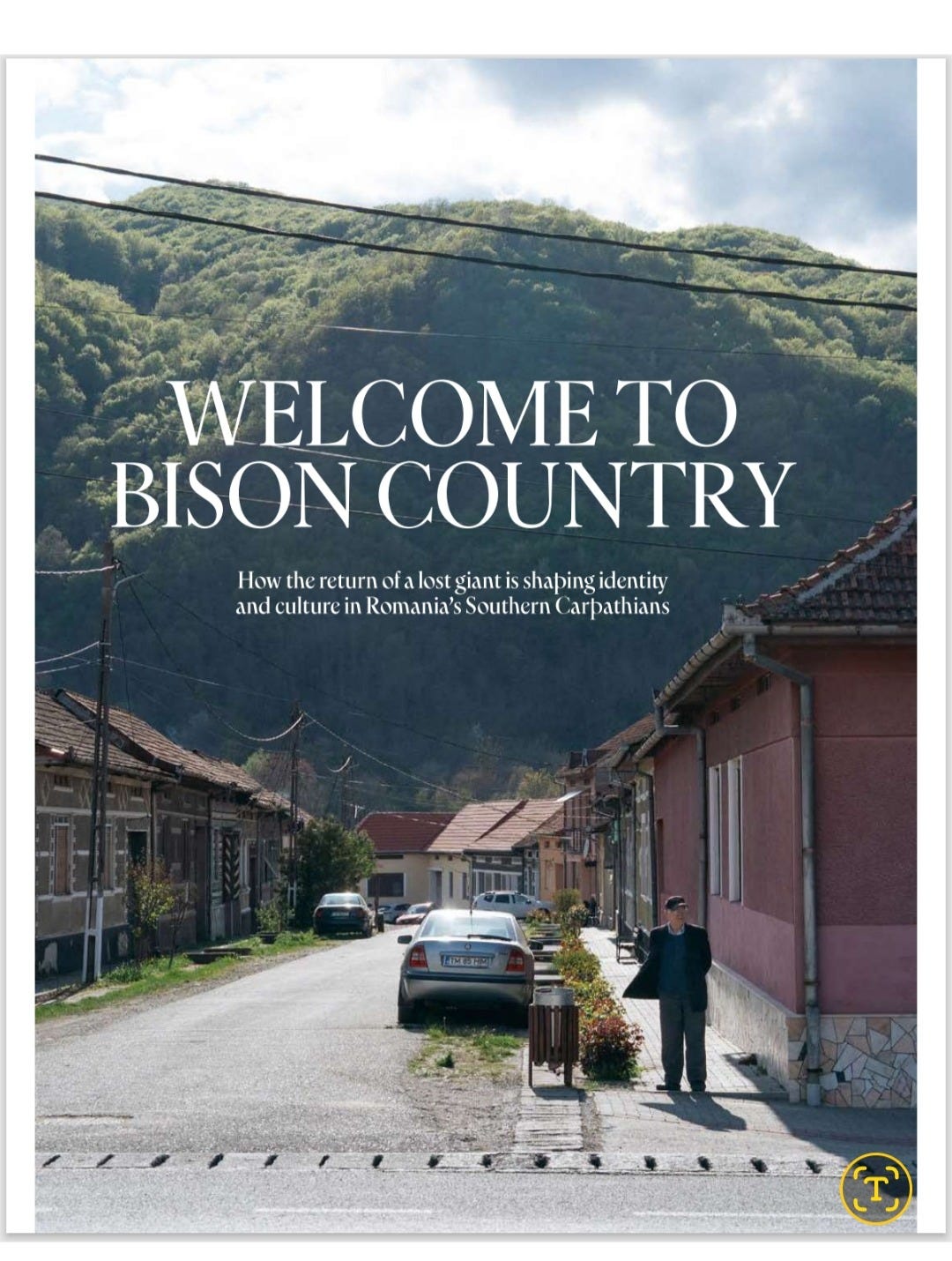
My 2,000-word article was part of the magazine’s first themed issue, focused on rewilding, which as my piece points out, can become much more than nature recovery.
Imagine5, based in Amsterdam, Copenhagen and San Francisco, and dedicated to environmental storytelling, sustainability and planet-positive change, publishes the magazine twice a year, in June and December. This issue was just released with 188 pages of scintillating copy and gorgeous photography – printed in Denmark and completely advertising free. You read that right. No ads.
A nonprofit media organization, Imagine5 is supported by foundations, philanthropists and public donations. Operating independently with a small international staff and stable of freelance contributors, it generates revenue through memberships, donations and magazine subscriptions.
Seems that legions of people are seeking positive storytelling over doomscrolling. Consider these stats from Imagine5:
· 473,000 followers on Instagram
· 219,000 followers on Facebook
· 14,000 followers on LinkedIn
Readers of the physical and digital magazine come from 46 countries and the hard-copy – like a thick, coffee-table book – is now available in 1,400 stores, including major airports, across North America, Europe, Asia and Australia.
This issue of Imagine5, Volume 5, isn’t online yet – only in print and digital by purchase only via the Imagine5 website (print €22/$25; digital €9/$10). I’ll have a link to share later, probably in autumn, but for now I have to respect the paywall and can’t distribute the full article. Previous stories are accessible for free on the site, and I’d encourage you take a look.
My piece, accompanied by the vivid visuals of talented Romanian photojournalist Andrei Pungovschi, is in the magazine’s fifth issue since its founding in 2022, while the cover story is an interview with actor Zach Galifianakis, star of Netflix’s “This Is a Gardening Show.” Earlier cover interviews featured ethologist and chimpanzee icon Jane Goodall and Academy Award-nominated actor Viggo Mortensen.


I spent two long but rewarding days in Bison Country with Pungovschi, who has 35,000 followers on Instagram and was contracted separately by the magazine. Much of his photography is for Getty Images, Agence France-Presse and Bloomberg Business. He turned out to be a great partner. While scoping bison in the wilds of Romania, we swapped American J-school stories – mine from UNC Hussman School of Journalism and Media and his from the Missouri School of Journalism, where he spent a year as a Fulbright Scholar.


The Southern Carpathians, also known as the Transylvanian Alps, are teeming with stunning beauty, snow-capped peaks and steep ravines. Bears, wild boars, wolves and lynx inhabit its dense forests, with small villages and isolated hamlets dotting the rural landscape.
Shepherds and their flocks of sheep are a common sight as are, of course, wild bison, which are not aggressive and avoid conflict, and to whom villagers have slowly grown accustomed in this man-beast coexistence.
Rewilding Europe and World Wildlife Fund started the program in Romania in 2014, transporting 17 bison from zoos and reservations in Germany, Italy and Sweden. The animals were welcomed with fanfare and blessed by an Orthodox priest.
Today, after a series of reintroductions, the population has grown to about 250 bison, which are concentrated in a 370-square-kilometer area (143 square miles) of mountainous forests, with 60% having been born in the wild. The area spans 279,000 protected hectares (690,000 acres), including two national parks.
With the help of Rewilding Romania staff, I covered a lot of ground and interviewed more than 15 people, including rangers, rewilding experts, locals, entrepreneurs who’ve spawned businesses due to bison tourism – such as a bakery and guesthouse owner and a guide giving horseback tours – and a village priest, who had to calm the nerves of his parishioners after bison invited themselves into the church’s cemetery and caused damage to a fence and several gravestones.


The bison mostly stay in the forest but as herbivores, they sometimes stir trouble by entering villages, trampling gardens or disturbing orchards in search of snacks. On the plus side, as a keystone species, their ecological impact is critical to nature.
European bison, which have longer legs and are lighter and nimbler than their American cousins and better adapted to forest living versus prairie grazing, can grow to 2 meters tall (6-feet-6-inches) and weigh up to 1,000 kilograms (over 2,200 pounds).
That’s Michael Jordan’s height and a small car’s weight. Like MJ, they’re incredibly athletic, capable of leaping over fences their own height, as rangers have witnessed.
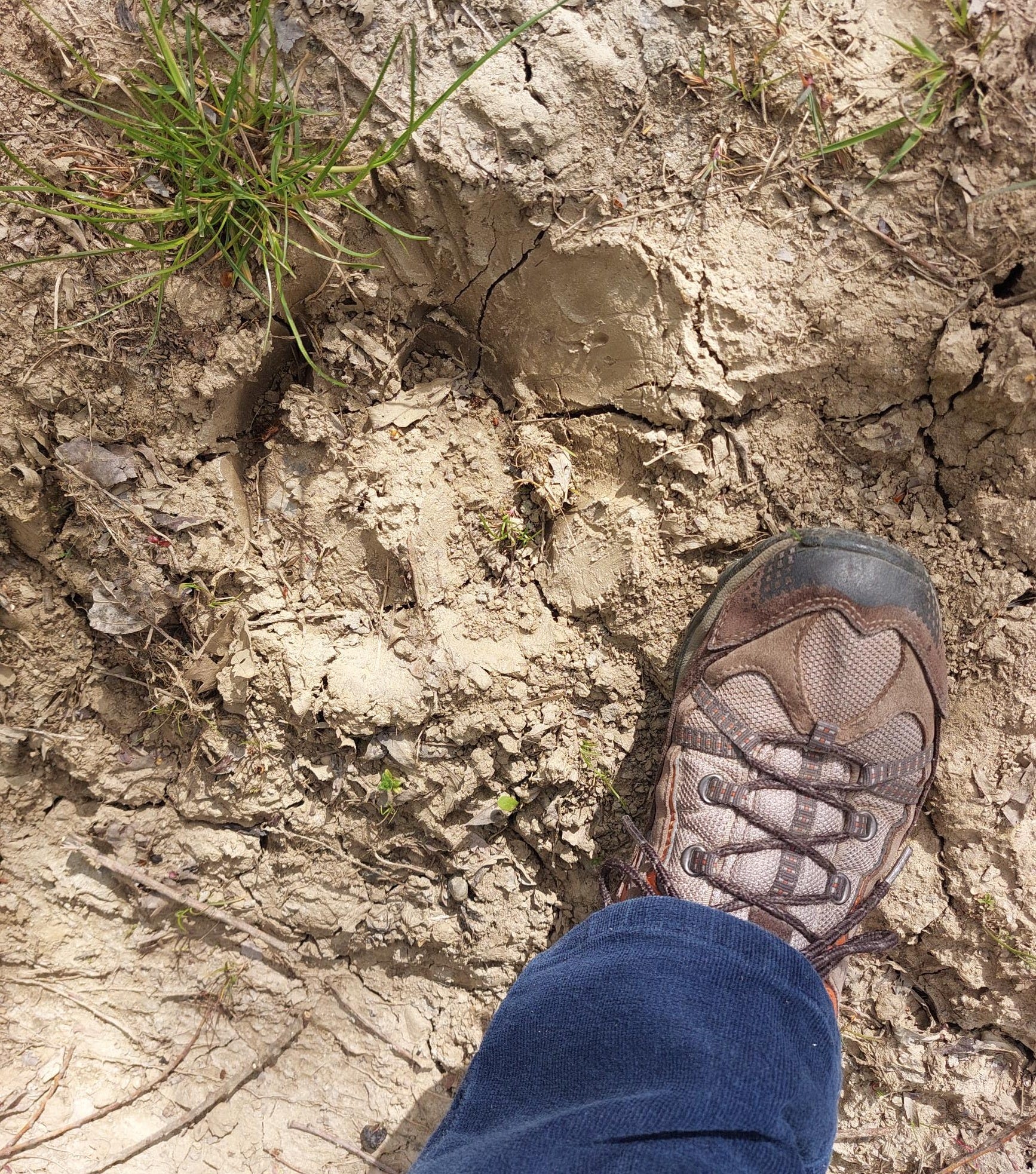
In two days, we only saw bison tracks, plenty of them, but not one bison. Being well into spring with thickening vegetation (and ample food sources), the bison were easily camouflaged. They avoid people and rangers told me that you often have to wait quietly for hours, deep in the forest, to see one. Winter is best for spotting them, when the trees are bare, though locals see them all the time.
In speaking with villagers – some of whom have moved back from working abroad for new bison-related prospects – it was abundantly clear that the bison have become a powerful symbol of both ecological recovery and regional identity and pride, countering the narrative of rural decline.
Places like Casa din Cucă, the gorgeous, mountaintop guesthouse where the magazine put us up, are drawing tourists curious about the bison and offering an authentic experience, down to the traditional food made from recipes spanning generations.
While one often encounters “The Neighbor’s Goat” mentality and lack of civic spirit in Romania, I didn’t sense that in Armeniș, where locals are helping each other and trying to capitalize, in a good way, on newfound opportunities in an area that drew few tourists and had zero job growth – all sparked by new neighbors, hairy giants who found their way back after two centuries.


If you don’t want to commit to a subscription, but you’d like to show appreciation for my writing on The Neighbor’s Goat, please consider Buy Me A Coffee.
I like long black or flat white. Thank you!
So cool, Andy! ❤️